

Views: 0 Author: Site Editor Publish Time: 2026-09-22 Origin: Site


Children's rooms need furniture for much more than sleeping. A well-planned space should support storage, learning, reading, creative activities, organization, and everyday independence without making the room feel overcrowded.
The different types of kids furniture generally include beds, wardrobes, dressers, bookshelves, toy storage, desks, activity tables, chairs, bedside furniture, and multifunctional pieces. The best combination depends on the child's age, room size, routine, and how the space may need to change over time.
This guide explains the major furniture categories, their functions, selection priorities, and how parents and B2B buyers can build practical children's furniture collections.
Kids furniture can be grouped according to the activity it supports. Bedroom furniture handles sleep and clothing storage, study furniture creates space for homework and creative work, while bookshelves and organizers help keep books, toys, and personal items under control.
Not every child needs every furniture type at the same time. A preschooler's room may need a low bed, accessible toy storage, and an activity table, while an older child's bedroom may prioritize a larger wardrobe, bookshelf, study desk, and more organized storage for school materials.
The best approach is to begin with essential functions and add furniture gradually. This prevents the room from becoming crowded and makes it easier to adapt the layout as the child's needs change.
FuJian Fondlive Houseware Co., Ltd. supplies indoor furniture across several home categories. Buyers can explore Fondlive furniture products when planning coordinated children's rooms or broader home furniture collections.
The kids bed is usually the largest and most important piece in a children's bedroom. It establishes the sleeping area and often determines how much floor space remains for storage, study furniture, and play.
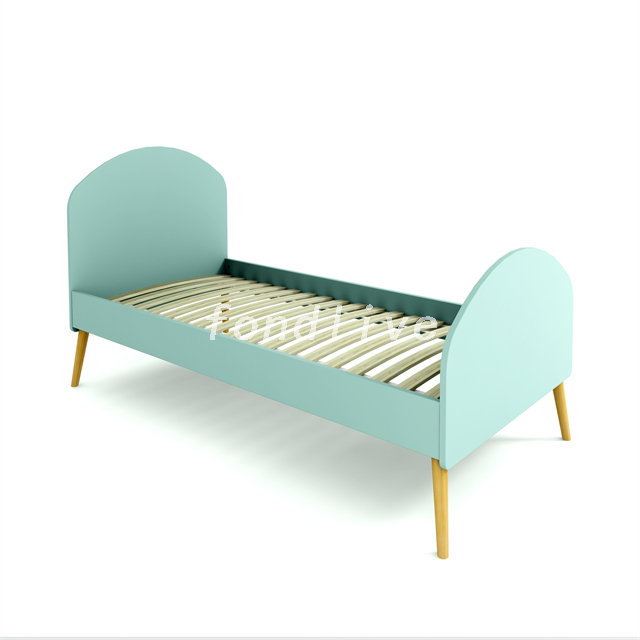
Kids beds come in several configurations. Standard single beds provide a straightforward long-term option, while lower beds may suit younger children moving from a crib. Some designs include guardrails, storage, raised frames, or other practical features.
A good bed should fit the child's age without becoming unusable too quickly. Highly themed shapes may appeal to younger children, but simpler designs often remain suitable for longer as tastes change.
Construction also deserves attention. The frame should remain stable during normal movement, edges should be well finished, and mattress dimensions should be considered before purchase. Parents should avoid choosing a bed only because it looks attractive in a photograph.
For a product example, buyers can view this Fondlive kids bed.
Kids storage furniture covers a broad category because children's belongings change significantly with age.
Younger children often need storage for toys, picture books, bedding, and clothing. School-age children gradually need additional space for textbooks, stationery, craft materials, sports equipment, and hobbies.
Closed cabinets and drawers are useful for reducing visual clutter. Open compartments make frequently used items easier to find and encourage children to return things independently.
The strongest storage system often combines both. A room might use a wardrobe for clothing, a bookshelf for books, and a low cabinet for toys rather than depending on one oversized unit.
Furniture should remain easy to navigate. Too many small organizers can make a room feel more cluttered instead of more organized.
Tip: B2B buyers should develop storage furniture around changing use cases rather than designing every product for one narrow age group.
Beds can vary according to age, available floor space, number of children, and storage needs.
A standard single bed is often the most adaptable choice, but other layouts can work better when space is limited or two children share one room.
A standard kids bed provides a familiar sleeping arrangement and usually offers the greatest long-term flexibility.
Simple beds can transition easily from childhood into later years when the proportions and design remain neutral. Bedding, wall decor, and accessories can provide the age-specific character instead.
This approach can also reduce replacement costs. Parents can update the room visually without changing the largest piece of furniture.
For retailers, neutral beds can serve a wider customer range than highly themed products.
Guardrails can be useful for younger children transitioning into a larger bed.
The purpose is to provide additional edge protection without creating the enclosed structure of a crib.
Guardrail position, height, mattress thickness, and overall bed construction should work together. The bed should also remain easy for the child to enter and leave.
These designs should be evaluated as complete products rather than treating the guardrail as a decorative feature.
Beds with integrated drawers or compartments can help maximize space in compact bedrooms.
Under-bed storage is useful for bedding, seasonal clothing, toys, or other items that do not require daily access.
The advantage is footprint efficiency. One piece performs both sleeping and storage functions without adding another cabinet.
However, drawer clearance must be considered. A storage bed placed too close to a wall or another piece of furniture may prevent the drawers from opening fully.
Shared bedrooms may require more efficient use of vertical space.
Bunk-style arrangements can free floor area for study furniture, wardrobes, or play. However, they require more careful attention to age suitability, access, structural stability, and room height.
The remaining room should still feel usable after the bed is installed. A space-saving bed loses much of its advantage if another oversized furniture piece blocks circulation.
For shared rooms, the full floor plan should be considered before individual furniture products are selected.
Storage furniture should make children's belongings easier to organize, not simply hide everything behind doors.
Different storage formats work best for different types of items. Clothing, toys, books, school supplies, and display objects usually require different internal arrangements.
A children's wardrobe provides vertical storage for clothing, jackets, uniforms, bags, and larger personal items.
The best internal arrangement depends on age. Younger children may need more shelving and drawers, while older children may benefit from additional hanging space.
Accessibility also matters. Frequently used shelves should remain within practical reach when independence is a goal.
A wardrobe should fit the room without dominating it. Tall furniture can increase storage capacity, but overly deep or wide cabinets can reduce usable floor space significantly.
A dresser provides drawer-based storage for folded clothing and smaller belongings.
It can be particularly useful when the room already has some hanging storage but lacks organized drawers.
The top surface also provides useful space for lighting, small organizers, decorative objects, or frequently used items.
However, drawers should open into clear space. Buyers should consider the dresser depth plus the additional clearance required when drawers are fully extended.
A kids bookshelf keeps books visible and organized while supporting reading habits and independent selection.
Low shelving can work well for younger children because books remain accessible. Older children may require taller units as textbooks and personal collections grow.
A bookshelf does not need to store only books. Baskets, small containers, and decorative objects can make it a flexible organizer.
Fondlive includes kid-oriented bookshelf products among its furniture categories. Buyers can browse the Fondlive website for related furniture options.
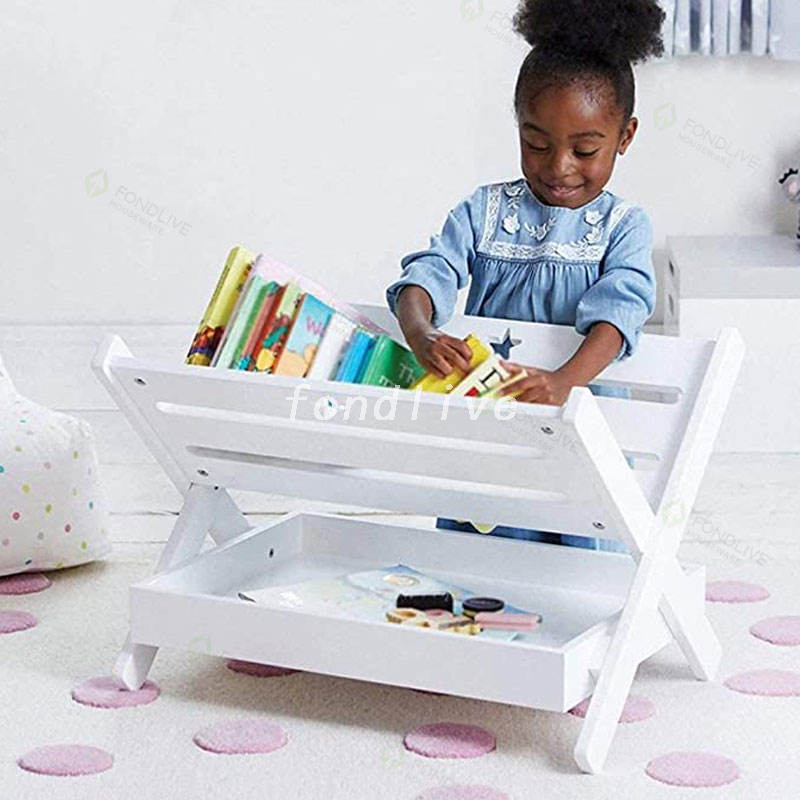
Toy storage works best when children can understand the organization system easily.
Large open compartments are useful for frequently used toys. Smaller drawers or bins can organize building pieces, art materials, or accessories.
Closed storage can make the room feel calmer by hiding colorful visual clutter. However, completely concealed storage may make it harder for younger children to remember where items belong.
A combination of open and closed storage often provides better everyday usability.
Multi-purpose cabinets can change function as children grow.
A low cabinet used for toys during early childhood may later store books, school supplies, electronics, or hobby materials.
This longer functional lifespan makes simple cabinets attractive for both residential and commercial buyers.
Neutral styling also helps the furniture transition from children's spaces into guest rooms, study areas, or other parts of the home.
Study furniture becomes more important as children spend more time drawing, reading, completing homework, and using computers.
The correct setup depends on age and activity. Younger children may need a low table, while older students need a more structured desk arrangement.
A kids study desk creates a dedicated surface for schoolwork, reading, writing, and digital learning.
The desk should provide enough usable surface without consuming unnecessary floor area. Storage drawers can help organize stationery and school materials.
Placement affects usability as well. Natural light can be useful, but direct glare should be avoided when the child uses a screen.
Electrical access also becomes more important as children grow. Laptop chargers, lamps, tablets, and other devices may all need convenient connections.
A design with useful drawers can combine workspace and storage. Fondlive provides table products with integrated storage, including this table with drawers.
An activity table is usually lower and simpler than a conventional study desk.
It can support drawing, crafts, puzzles, building activities, early learning, and play.
For younger children, this type of furniture often provides more value than a large formal desk. The lower proportions allow easier independent use.
As the child grows, the activity table may eventually be replaced by a study desk. Choosing a simple design can extend its use for other purposes before replacement becomes necessary.
A kids table and chair set provides a complete activity area sized around younger users.
It can be used for drawing, snacks, crafts, games, early education, or group play.
The table should have enough surface space for the intended activities without becoming difficult to move around.
Chairs should feel stable and should fit the table height comfortably. Proportion matters more than simply reducing the dimensions of adult furniture.
A study chair becomes increasingly important as homework sessions grow longer.
The chair should position the child comfortably relative to the desk surface. Feet, arms, and back should not be forced into an awkward position.
A very small chair may need replacement quickly, while an oversized chair can be uncomfortable for younger users.
For longer-term use, buyers can consider designs that support several stages of growth or allow adjustment.
Not all kids furniture is essential, but selected accent pieces can make the room more useful and comfortable.
The key is adding furniture only when it serves a real function.
A bedside table provides space for a lamp, books, water, clocks, or small personal items.
It can also include a drawer or cabinet for items that should remain within easy reach.
The table should be proportionate to the bed. Oversized bedside furniture can consume valuable space in compact children's rooms.
For younger children, simple edges and practical surfaces may be more useful than elaborate decorative details.
A small reading chair can create a separate quiet area within the bedroom.
This can be particularly useful when the child enjoys reading but does not always want to use the bed or desk.
The chair should not interfere with primary walking routes. In small bedrooms, floor cushions or compact seating may provide the same function more efficiently.
A reading area becomes more effective when placed near a bookshelf and suitable lighting.
A storage bench combines seating and organization.
It can sit near the end of a bed, below a window, or against an open wall, depending on room dimensions.
Inside storage can hold toys, bedding, bags, or seasonal items. The top provides another practical surface.
However, the lid mechanism and intended use should be evaluated carefully for children's spaces. Product design should prioritize safe operation and everyday practicality.
Multifunctional kids furniture combines more than one practical role within the same footprint.
This category is especially useful in apartments, shared bedrooms, and other spaces where floor area is limited.
The goal is not to make every furniture piece complicated. Good multifunctional furniture combines functions that naturally work together.
A bed with drawers combines sleeping and organization.
This is one of the most practical multifunctional options because the under-bed area would otherwise remain underused.
It can reduce the need for a separate chest or cabinet.
The room should still provide enough clearance for drawers or lifting mechanisms to operate comfortably.
A desk with integrated storage keeps study materials close to the work surface.
This reduces the number of separate cabinets needed in the study zone.
Drawers can organize stationery, while shelves may hold books or devices.
The design should still preserve enough legroom. Adding storage should not make the desk uncomfortable to use.
A bookcase can combine display shelves with closed lower storage.
Books and decorative items remain visible, while toys or miscellaneous items can be hidden.
This makes the unit more flexible as the child grows.
Later, the same furniture can store textbooks, hobby materials, or office supplies.
Some of the most useful multifunctional furniture does not perform two functions simultaneously. Instead, it can serve different functions at different ages.
A simple cabinet may begin as toy storage and later become school storage. A neutral table may start as an activity surface and eventually support homework.
This type of adaptability can provide better long-term value than highly specialized furniture.
Tip: For B2B collections, products with several realistic use stages can appeal to a broader age range and reduce SKU complexity.
Furniture selection should respond to developmental stage without making the room excessively age-specific.
The most successful setup usually includes long-term core furniture and a smaller number of age-specific pieces.
Younger children benefit from furniture that is easy to reach and easy to understand.
Low beds, accessible bookshelves, simple toy storage, and activity tables can encourage independent use.
Large amounts of tall furniture may not provide much direct value for the child at this stage, although adults may still require wardrobe storage.
The room should also preserve generous open floor space for play.
School-age children begin requiring more structured study and organization.
A desk, comfortable chair, bookshelf, and storage for school materials become increasingly important.
Clothing storage also expands as uniforms, sportswear, shoes, and seasonal items increase.
The room should gradually shift from being mainly a play environment toward a combination of sleep, study, storage, and recreation.
Older children generally need furniture that feels less juvenile.
A full-size study desk, larger wardrobe, book storage, and more flexible drawers or cabinets become useful.
Simple bed and storage designs are often easier to carry into this stage than heavily themed children's furniture.
Neutral furniture can also adapt to changes in color preferences, hobbies, and room decoration without requiring complete replacement.
The correct furniture combination depends on available space, age, storage requirements, and daily activities.
Start with essential functions rather than buying a complete set automatically.
Room measurements should come before furniture selection.
Record wall lengths, window locations, doors, radiators, electrical outlets, and any built-in storage.
Then consider how much clearance each furniture piece needs when doors and drawers are open.
This prevents common layout problems such as blocked walkways or cabinets that cannot open fully.
The bed and main storage normally deserve first priority because they occupy the most space.
Position these pieces before adding desks, bookshelves, or accent furniture.
Once their footprint is clear, remaining space can be allocated more realistically.
This process is especially important in smaller bedrooms.
A preschool child may not need a full desk.
A school-age child usually benefits much more from a dedicated workspace.
Furniture should therefore reflect the current stage rather than trying to predict every future need.
When possible, choose pieces that can remain useful after their original purpose changes.
A room can contain every furniture category and still function poorly.
Too many cabinets, shelves, chairs, and tables reduce open space and make cleaning more difficult.
Choose furniture according to actual storage and activity requirements.
Each piece should have a clear role within the room.
Retailers, wholesalers, private-label brands, and project buyers need to evaluate kids furniture as both a design product and a supply-chain product.
Appearance matters, but repeatable quality, dimensions, packaging, assembly, and product positioning are equally important.
A practical kids furniture range can be organized around several core categories:
Beds
Bookshelves
Storage cabinets
Wardrobes and dressers
Study desks
Activity tables
Chairs
Bedside furniture
Multifunctional storage
These categories cover the main customer needs without creating excessive overlap.
Retailers can then develop good-better-best levels through materials, finishes, storage features, and design details.
Neutral furniture generally covers a wider age range.
White, natural wood, muted green, soft blue, gray, and simple two-tone designs can work across several children's room styles.
Highly themed furniture may have strong short-term appeal but a narrower market.
For long-term product planning, adaptable forms can make inventory easier to manage.
Flat-pack or KD construction can improve transportation efficiency, but assembly quality becomes critical.
Drilling should remain consistent, hardware should be clearly organized, and instructions should be easy to understand.
Packaging must protect corners, painted surfaces, panels, and fittings during transportation.
Retailers should evaluate the complete delivery experience rather than only the assembled showroom product.
B2B buyers may need custom colors, dimensions, logos, or packaging for specific retail channels.
FuJian Fondlive Houseware Co., Ltd. supports indoor furniture manufacturing for different home applications. Buyers can visit the Fondlive website when discussing product and customization requirements.
Customization works best when core construction remains standardized. This can help buyers differentiate products without creating excessive production complexity.
Tip: Strong kids furniture collections balance child-friendly functionality with manufacturing consistency and efficient logistics.
The following table summarizes the main categories and their typical functions.
Kids Furniture Type | Main Function | Typical Age Range | Priority |
|---|---|---|---|
Kids Bed | Sleep | All ages | Essential |
Wardrobe | Clothing storage | All ages | Essential |
Dresser | Folded clothing storage | All ages | High |
Bookshelf | Books and display | Preschool and older | High |
Toy Storage | Toys and activities | Younger children | High |
Study Desk | Homework and learning | School-age and older | High |
Activity Table | Crafts and play | Toddlers and preschoolers | High |
Chair | Seating | All ages | High |
Bedside Table | Daily essentials | Older children | Optional |
Storage Bench | Seating and storage | Various ages | Optional |
Multifunctional Furniture | Space efficiency | All ages | Depends on room |
The table should be treated as a planning tool rather than a mandatory shopping list. A small bedroom may combine several functions into fewer pieces, while a larger room can separate sleep, storage, reading, and study areas more clearly.
The different types of kids furniture can be grouped around sleeping, storage, study, play, seating, and organization. Beds establish the main sleeping area, while wardrobes, dressers, bookshelves, and toy organizers keep everyday belongings under control.
Study desks, activity tables, and chairs become more important as children grow. Multifunctional furniture can be particularly useful in smaller rooms because it combines several practical functions without consuming additional floor space.
The strongest children's rooms do not necessarily use every furniture category. They select the right combination according to age, available space, daily activities, and long-term flexibility.
FuJian Fondlive Houseware Co., Ltd. provides indoor furniture for different residential applications, including children's furniture and related storage and table products. Buyers can also review individual products such as the Fondlive kids bed and table with drawers when developing children's room assortments.
For wholesalers, retailers, private-label brands, and project buyers, a strong kids furniture range should combine practical functions, adaptable styling, efficient packaging, consistent production, and furniture categories that remain useful as children grow.
A: The main types of kids furniture include beds, wardrobes, dressers, bookshelves, toy storage, desks, activity tables, chairs, bedside tables, and multifunctional storage pieces.
A: A kids bed and suitable storage are usually the first priorities. A bookshelf, desk, activity table, and chair can then be added according to age and available space.
A: Good kids storage furniture combines accessible open shelving with drawers or closed cabinets so children can reach daily items while larger amounts of clutter stay organized.
A: School-age children generally benefit from a bed, clothing storage, kids study desk, suitable chair, bookshelf, and organized storage for school materials and personal belongings.
A: Compact beds, vertical storage, desks with drawers, and multifunctional kids furniture can reduce the number of separate pieces while preserving more floor space.
A: Yes, but not every piece requires replacement. Simple beds, wardrobes, bookshelves, and storage can often remain useful while activity tables gradually change into more structured study furniture.


