

Views: 0 Author: Site Editor Publish Time: 2026-10-21 Origin: Site


Is your bathroom a relaxing sanctuary, or does it feel more like a cluttered obstacle course? Picture the morning rush. Your daily routine suffers when countertops vanish beneath a sea of half-empty lotion bottles, tangled hair tools, and damp towels. Finding what you need becomes a frustrating treasure hunt.
A properly engineered storage unit easily solves this daily chaos. Upgrading your space goes far beyond simply hiding messes behind closed doors. Whether you are planning a full-scale renovation or a quick weekend refresh, investing in premium bathroom furniture is the strategic choice for organizing toiletries while elevating the room's visual appeal.
In this comprehensive guide, we will walk you through the essential technical details. You will learn how to select moisture-resistant materials, measure for exact dimensional fit, and choose a design vocabulary that seamlessly integrates with your home's architecture.
Moisture Resistance is Non-Negotiable: Bathrooms experience rapid, extreme humidity fluctuations. Selecting resilient materials ensures long-term structural integrity.
Size Dictates Daily Function: Accurate measurements are critical. Evaluating width, height, and specifically depth prevents the obstruction of walkways and existing plumbing infrastructure.
Style Meets Utility: The visual profile of your cabinetry should harmonize with your current decor, whether leaning toward minimalist wall-mounted units or natural freestanding structures.
Internal Organization Matters: Maximize cubic storage volume through adjustable shelving, deep drawers, and high-quality functional hardware like soft-close hinges.
Making a structural upgrade to your bathroom organization system is a highly calculated home improvement decision. Recent market analyses reveal a distinct shift in residential interior architecture. Modern homeowners are rapidly abandoning purely utilitarian, cramped layouts. Instead, the industry trend heavily favors wellness-centric spaces that mimic high-end spas. Market data highlights a surging demand for sustainable, moisture-resistant cabinetry that promotes visual calm. Buyers now prioritize eco-friendly materials that do not compromise on load-bearing capacity.
In this evolving landscape, integrated high-capacity storage is no longer an afterthought. It serves as a foundational architectural element driving both daily utility and property value.
Environmental psychology studies consistently indicate that organized physical spaces contribute to reduced cognitive load and lower stress levels. The bathroom is typically the first and last room you utilize in a day. An organized environment establishes a predictable, efficient routine. Imagine smoothly pulling open a drawer that perfectly houses your tall shampoo bottles, rather than knocking over five different items just to reach your toothpaste.
Furthermore, a dedicated storage system serves a critical hygienic function. Storing cosmetics, clean towels, and personal care items on open countertops exposes them to airborne bacteria and excessive ambient moisture. Enclosing these items within a properly ventilated cabinet protects them from degradation. This effectively extends the shelf life of your toiletries and maintains the sanitary condition of your linens.
From a real estate perspective, bathroom fixtures heavily influence property valuation. Prospective buyers scrutinize storage capacity closely during home tours. High-quality, durable cabinetry signals that the home has been meticulously maintained. While minor cosmetic updates offer moderate returns, installing robust storage solutions is a verifiable asset that significantly enhances the marketability of the property.
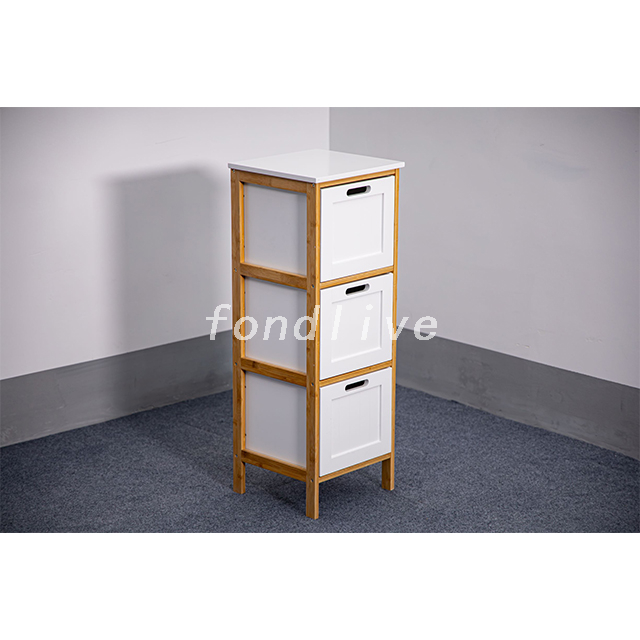
The bathroom is an extreme microclimate characterized by rapid temperature changes and high relative humidity. Consequently, the material composition of your cabinetry is the single most important factor determining its lifespan. Consumers must evaluate materials based primarily on their dimensional stability and moisture tolerance.
Material Type | Moisture Resistance | Durability | Best Application |
|---|---|---|---|
Solid Wood | Moderate to High | Excellent | High-end renovations with premium ventilation systems. |
Plywood | High | Very Good | Standard residential use requiring strong structural integrity. |
Engineered Wood/MDF | Low to Moderate | Fair | Budget-friendly updates in well-ventilated half-baths. |
Natural Bamboo | Exceptional | Excellent | Eco-conscious designs requiring high resistance to warping and mildew. |
Solid wood is traditionally viewed as the gold standard for high-end cabinetry. It offers unparalleled structural strength and a timeless aesthetic. However, wood is naturally hygroscopic. This means it constantly absorbs and releases moisture. If not treated with commercial-grade sealants, solid wood can warp or crack in a steamy environment.
In contrast, furniture-grade plywood offers an optimal balance of durability and cost. Plywood is constructed by gluing multiple thin layers of wood together with alternating grain directions. This cross-grain construction gives plywood exceptional dimensional stability, making it highly resistant to warping caused by humidity.
Bamboo is technically a fast-growing grass rather than a traditional wood, making it a highly renewable resource. Its natural cellular structure makes it incredibly dense and inherently resistant to water, mold, and mildew. Because of its resilience in humid environments, installing a freestanding bamboo bathroom storage cabinet has become a leading strategy for modern homeowners. Bamboo does not swell easily. Its light, warm tones introduce a calming, organic texture to the space without the vulnerability of standard hardwoods.
Selecting the correct dimensions is a precise technical process. A cabinet that looks stunning in a showroom can easily disrupt foot traffic and plumbing access if it does not fit your specific floor plan.
Before evaluating products, grab a reliable tape measure and establish precise dimensions of your layout. First, record the exact width and depth of the intended installation area. Specifically, remember to subtract the thickness of your baseboards from your total available width to ensure the unit sits flush against the wall. Next, check your operational clearances. Measure the swing radius of the bathroom door, shower enclosure, and any adjacent drawers to guarantee the new cabinet doors can open fully without striking other fixtures.
Standardization in manufacturing means most cabinets fall into predictable size categories. For instance, a well-engineered narrow tower often features optimized dimensions like 13 inches wide, 11.8 inches deep, and up to 65 inches tall. These specific parameters ensure the unit maintains a minimal footprint while maximizing vertical storage volume.
Depth is frequently the most overlooked dimension, yet it directly dictates how much floor space remains for comfortable movement. Standard cabinets are 18 to 21 inches deep. However, for urban apartments or galley-style bathrooms, narrow-depth cabinets ranging from 11 to 15 inches are highly recommended. While they require you to fold towels differently, they maintain essential foot traffic clearance.
The architectural layout of your bathroom dictates the structural type of cabinet you should install. Based on spatial planning principles, here is an objective breakdown of the primary configurations.
Freestanding units rest directly on the floor and are supported by their own base or legs. They are highly versatile and require minimal installation, making them an optimal choice for renters or quick upgrades. Because they utilize vertical space from the floor up, they offer maximum interior volume. Integrating bamboo bathroom storage solutions provides an excellent balance of high-capacity storage and mobility, as they can be easily relocated if you redesign the room later.
Wall-mounted cabinets are engineered to attach directly to the wall studs, leaving the floor beneath them entirely exposed. This design is highly advantageous for small spaces. By keeping the floor visible, floating cabinets create an optical illusion of a larger, more expansive room.
In half-baths where horizontal floor space is virtually non-existent, vertical space becomes your most valuable asset. Over-the-toilet cabinets feature an open lower frame that straddles the toilet tank, efficiently capturing wasted wall space for storing extra tissue rolls and daily toiletries.
A storage unit should visually integrate with your existing tiles, fixtures, and lighting. Selecting the right design vocabulary ensures a cohesive interior architecture rather than a mismatched afterthought.
Modern design prioritizes clean lines and uncluttered surfaces. Cabinets in this category typically feature flat-panel doors without raised detailing. Hardware is often integrated, utilizing handle-less push-to-open mechanisms. Conversely, traditional styles draw inspiration from historical architectural details, featuring raised-panel doors, intricate crown molding, and ornate hardware.
Designed to evoke the tranquility of a high-end wellness retreat, the Zen aesthetic relies heavily on organic textures and breathable designs. Slatted doors are a hallmark of this style, allowing for air circulation while obscuring the contents inside. Incorporating natural wood tones anchors this aesthetic, bringing warmth and an airy, grounded feel to the space while maintaining rigorous moisture resistance.
The exterior style dictates the visual appeal, but the interior engineering dictates daily utility. A well-designed cabinet utilizes specific structural features to maximize every available inch.
Fixed shelves severely limit storage efficiency. Toiletries vary wildly in height, from tall liter-sized shampoo bottles to small jars of face cream. Cabinets equipped with adjustable shelving allow you to customize the vertical spacing. This flexibility prevents wasted empty space above short items and ensures tall items can be stored upright without leaking.
Understanding the ergonomics of retrieval is also crucial. Cabinet doors are best suited for bulky items like stacks of towels and large cleaning supply caddies. In contrast, deep drawers are ergonomically superior for small, daily-use items. Drawers allow for top-down visibility, meaning items in the back are instantly accessible without requiring you to crouch down and blindly dig through a dark cabinet.
The mechanical components endure immense daily stress. Upgrading to soft-close hinges and heavy-duty drawer glides is essential. Soft-close mechanisms use hydraulic dampers to catch the door before it slams shut. This not only maintains a quiet, peaceful environment during early morning routines but also prevents the mechanical wear and tear that leads to cracked frames over time.
Before finalizing your decision, review this objective technical checklist to ensure the selected product meets all functional and spatial requirements:
Accurate Dimensions: Have I measured the available width, height, and precise depth, accounting for baseboards and door swing clearances?
Material Suitability: Is the core material engineered to withstand my specific bathroom's ventilation and humidity levels?
Architectural Alignment: Does the style, color, and hardware complement my existing wall tiles and plumbing fixtures?
Structural Layout: Have I determined whether a freestanding, wall-mounted, or corner unit best optimizes my floor plan?
Internal Utility: Does the unit offer adjustable shelving or deep drawers to accommodate my specific storage volume needs?
Finding the right bathroom storage cabinet fundamentally improves your daily routines. It keeps your space organized, hygienic, and visually relaxing. Always measure your space carefully before buying to ensure a seamless fit. By prioritizing moisture-resistant materials and matching the architectural style to your home decor, you create a lasting asset. A well-chosen cabinet completely transforms your room from a cluttered necessity into a serene retreat. Upgrade your space with quality, purpose-built storage today. Explore the full range of high-performance freestanding bamboo bathroom storage cabinets at Fondlive to find the perfect engineered fit for your home.
High-quality plywood and solid wood are industry-standard choices due to their structural strength and longevity. However, for a highly sustainable and exceptionally water-resistant option, natural bamboo is excellent for high-humidity bathroom environments, as it naturally resists warping and mildew.
Standard bathroom cabinets typically range from 18 to 21 inches in depth, providing ample space for towels and large items. For smaller spaces, half-baths, or narrow hallways, shallow-depth cabinets ranging from 11 to 15 inches are highly recommended to maintain comfortable foot traffic and prevent spatial crowding.
Yes. Bamboo is a dense, highly renewable material that is inherently resistant to moisture, mold, and mildew. When properly sealed, it is incredibly durable and serves as an ideal structural material for the fluctuating humidity and temperature levels found in residential bathrooms.
Prevention relies on adequate ventilation and material selection. Ensure your bathroom exhaust fan runs during and for 30 minutes after showers. Choose cabinets with slatted doors to promote airflow, and select naturally mold-resistant materials like bamboo or properly sealed plywood.
Tall freestanding units, such as linen towers, can pose a tipping hazard if climbed on. To ensure maximum safety, always secure tall cabinets directly to the wall studs using anti-tip hardware brackets. This simple installation step guarantees structural stability and peace of mind.


